
The whole problem fits in one sentence. Salespeople are very good at selling themselves, so you don’t find out how they actually sell until after you’ve hired them.
I’ve watched it happen to a HVAC company, a commercial landscaper, and a three-branch paving operation. The candidate walks in sharp, tells a great story about the big account they closed, shakes your hand firm, and you’re sure you’ve found the one. Ninety days later they’ve booked nothing, they’re blaming your pricing, and you’re eating a base salary plus a truck payment for someone who can’t sell. You didn’t hire a salesperson. You hired someone who sold you on themselves, and those are two very different skills.
I run a hiring system with owners in the trades and facilities services. I call it the STAR process, and it’s built to take that exact risk off the table. It doesn’t lean on your gut, your resume-reading, or your ability to spot a closer across a desk. It leans on a repeatable filter that sorts the people who can sell from the people who can only sell themselves, and it does most of that work before you ever talk to a human being. Let me walk you through the whole thing.
Start With the Funnel, Not the Interview
Most owners think hiring is about finding the one great candidate. Wrong frame. It’s about processing volume cheaply enough that the great candidate surfaces on their own. When you post a real sales role, you don’t get a trickle. You get a flood. A single posting can pull 400 to 900-plus applicants, and most of them cannot sell. Your job isn’t to read 900 resumes. It’s to build a machine that reads them for you.
Here’s how the funnel actually behaves. Say the ad gets shown to roughly 1,000 people. About 600 of them don’t have the grit to finish the application, so they never apply, which is the whole point. Around 400 apply. Of those, maybe 200 will sit down and complete a one-hour sales assessment, and that’s the behavior you want, because that’s what sales is: doing something hard for a reward. Out of that group, the system recommends around 30. From 30 recommended candidates, you run a handful of interviews and hire one.
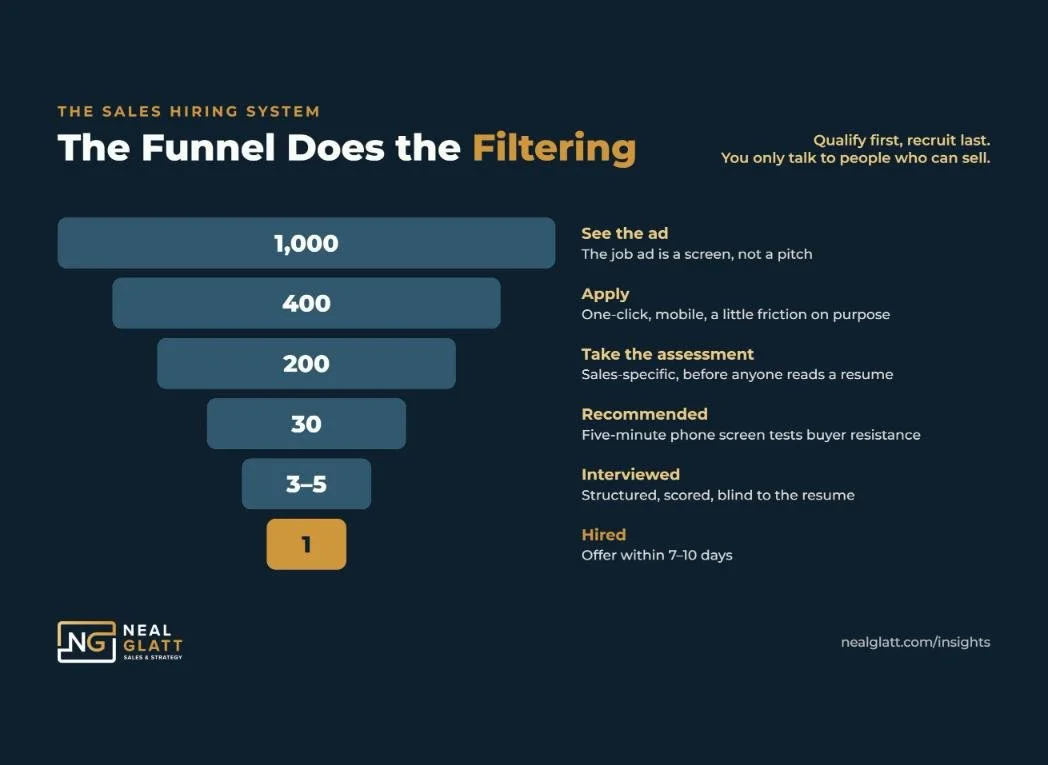
A real cut of numbers from a search I ran looked like this. 413 resumes came in, 131 of those people actually completed the assessment, and about 30 came back recommended. Notice that the funnel did the brutal work. Nearly 300 people removed themselves without me lifting a finger. That’s the entire design. You’re not hunting, you’re filtering.
OMG frames the same idea as a time-and-odds comparison, and it’s stark. The traditional way (collect 50 résumés, read all 50, call 10, interview a handful, then pick one and hope) burns roughly 20 hours for a 50/50 chance the hire works out. The assessment-first way flips both halves of that. Collect the same 50 résumés, let the assessment score them for you, interview only the 3 it recommends, and hire 1. About 5 hours, backed by predictive validity instead of a coin flip. Less time, better odds, and you never read a résumé that didn’t earn it.
The Job Ad Is a Screen, Not a Pitch
This is where most owners get it backwards. They write the job ad like a brochure. Award-winning culture, family-owned since 1987, we’re growing fast, come be part of the team. That ad attracts the wrong people, because comfort-seekers love a warm, easy invitation.
Your ad should do the opposite. It should be a screen. Make it a little difficult on purpose, so real salespeople self-select IN and everyone else self-selects OUT. Strip out the company puff. Nobody cares about your company or they’d already work for you. You’re not Amazon, and you’re not sexy enough to name-drop. A hungry closer at a pest control company or a restoration firm doesn’t pick you because of your mission statement. They pick you because there’s money on the table and a challenge worth taking.
So write the ad around the money and the challenge. Frame the on-target earnings as an aspirational number, roughly a 10% bump over what a strong rep would expect to make, because top performers chase upside. Keep the application one-click and mobile, because good salespeople are impatient and apply from their phone between appointments. And build in just enough friction that the tire-kickers bail. That friction isn’t a bug. It’s the first test.
Assessment First - Before You Read a Single Resume
The moment someone applies, an automated, sales-specific assessment triggers. This is the heart of the system, and it’s built on the Objective Management Group sales assessment, a tool that measures whether someone can actually sell, not whether they interview well.
The rule I hold owners to is short. You don’t even look at the resume or talk to anyone until they’re recommended. Not-recommended candidates don’t get an interview. No exceptions, no “but I have a good feeling about this one.” The assessment measures the things that predict selling: will to sell, hunter mentality, comfort talking about money, resistance to getting emotionally involved, and the ability to stay in control of a conversation. A landscaping foreman with a mediocre resume can light this assessment up, and a polished candidate with a beautiful resume can fail it cold.
This order matters more than anything else in the process, because the resume is the single most misleading document in hiring. It’s a marketing piece the candidate wrote about themselves. Reading it first poisons your judgment. Let the assessment go first, blind, and it hands you a short list of people who can really do the work.
The Five-Minute Phone Screen (A Test They Don’t Know Is a Test)
Once you’ve got recommended candidates, the next step is a five-minute phone screen, and it’s a test the candidate doesn’t know is a test. This one is my favorite, because it beats any contrived “sell me this pen” gimmick, which good salespeople see coming a mile away.
On the call, you’re professionally disagreeable. Not rude, not friendly, somewhere in between. Mildly resistant, a little hard to please. And you end the call at five minutes, on purpose. Then you score it. You award points to the candidate who keeps you on the line, who pushes back gently, who at the end asks how they did. That’s what great salespeople do. They keep you on the line. A real closer won’t let a mildly resistant buyer just hang up. They’ll probe, they’ll handle the resistance, they’ll try to advance the conversation. That’s the exact behavior you need on your roofing estimates and your HVAC replacement calls. You’re not screening for pleasantness. You’re simulating buyer resistance and watching who handles it.
Qualify First, Then Recruit
Here’s a distinction most companies get all jumbled together. Qualifying and recruiting are two different jobs, and they happen in order. The first roughly 75% of the process is assessment. The ad, the OMG assessment, the phone screen, all built to answer one question: can this person sell? Only in the last 25% do you switch into recruiting mode, where you start selling them on the job.
When you mix these up, when you start recruiting a candidate you haven’t finished qualifying, you fall in love with someone before you know if they can do the work. Then you bend your standards to keep them. Keep the two phases clean. Qualify hard first, recruit hard second. Never in the reverse order, and never at the same time.
Structured, Scored, Blind Interviews
By the time you’re interviewing, you’re down to a few genuinely qualified people, and the interview’s job is to confirm fit and rank them, not to rediscover whether they can sell. So run it with discipline. Same questions for every candidate. Score every answer on a rubric. And have your interviewers go in blind so they don’t see the resume first. That way they’re judging the person in front of them, not a document.
Ask indirect questions, not leadable ones. Don’t ask “are you okay working long hours?” because every candidate says yes. Ask “tell me about your expectation for work days and hours” and let them reveal themselves. Don’t ask “are you competitive?” Ask about a time they lost and what they did next. A leadable question hands them the answer you want. An indirect question makes them show you who they are.
This structure is also how you find the hidden gems, the high-potential people you’d have thrown out on paper. I ran a search where a candidate scored beautifully on the assessment and crushed the interview. If I’d just read her resume, I wouldn’t have given her an interview. The system caught someone my own bias would have discarded, and that happens constantly, because talent in the trades doesn’t always come with a tidy sales resume.
Move Fast and Make the Offer the Peak
Once you’ve got your person, speed wins. Really good candidates take the first offer about 70% of the time, which means every day you spend “thinking it over” is a day a competitor can grab them. From recommended to offer, I want owners moving in about 7 to 10 days.
And make the offer the peak of the candidate experience, not its low point. Too many owners nickel-and-dime at the finish line, turn the offer into a negotiation, and sour the whole thing. Make it clean, make it strong, make it feel like a win. The way you deliver the offer is the first thing your new rep learns about how you treat the people who bring you money.
The Economics - And Why This Beats a Recruiter
Let’s talk money, because that’s the language we both speak. A recruiter charges 20 to 30% of first-year compensation, call it $25,000 to $40,000 for one placement, and hands you a candidate they screened by reading a resume. That’s the exact thing that got you burned before. This system costs less, and it’s repeatable, so the second hire and the tenth hire cost you almost nothing incremental. It’s backed by a 12-month license with unlimited candidate assessments and a 6-month replacement guarantee.
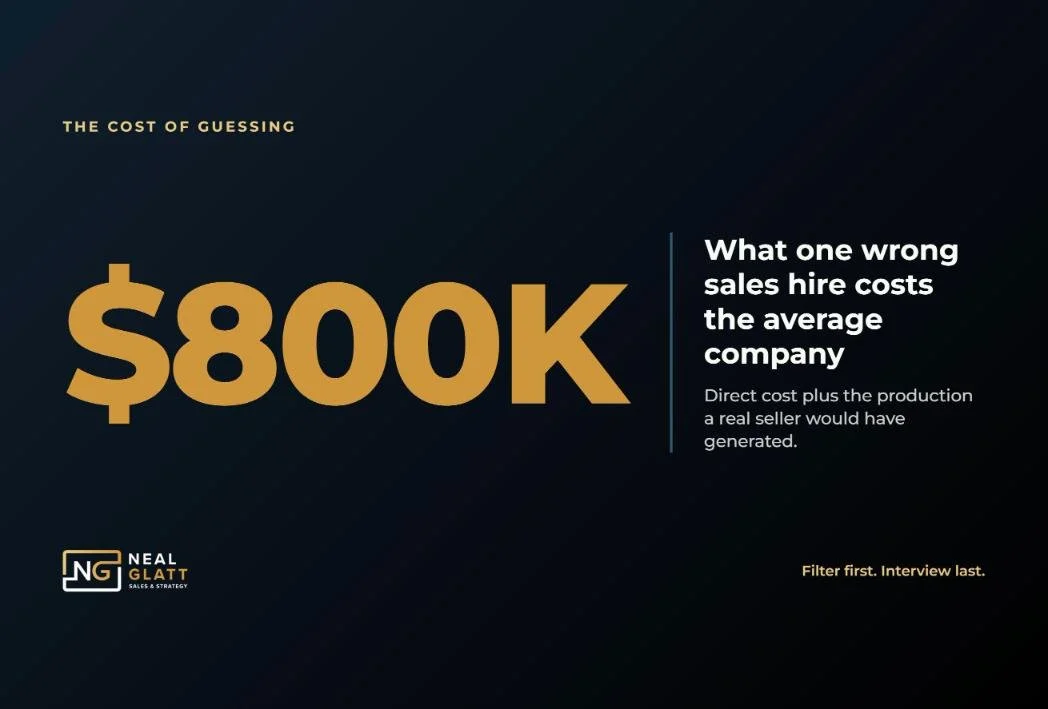
And be honest about the size of the downside you’re insuring against. About a third of salespeople are fired or laid off inside their first year. Between the direct cost of a churned hire and the production a real seller would have generated, one wrong sales hire runs the average company close to $800,000. The assessment is how you stop paying that. OMG’s recommended candidates leave in year one at 9%, versus 33% for the ones it flags as not-recommended. That spread, a third of your bad-fit hires walking versus fewer than one in ten of your good-fit ones, is the whole return on running the process.
I don’t just teach this system. I install it and run it with you. My hiring engagement starts at $11,000, and it includes the whole machine: the assessment license, the job ad written to screen, the phone-screen script, the structured interview questions and rubric, plus hands-on decision support when the candidates come in and you’re deciding who to hire. I’m on the calls. I read the assessments with you. I help you make the pick.
If you’ve hired a salesperson who sold themselves and then couldn’t sell for you (and if you’re a paving, HVAC, plumbing, electrical, roofing, landscaping, pest control, or restoration owner, you probably have) this is how you stop. Let’s build the system and hire the next one right. Reach out and I’ll walk you through how it works for your business.
Frequently Asked Questions
What is a sales hiring system? A sales hiring system is a repeatable, filter-first process for hiring salespeople who can actually sell, rather than candidates who merely interview well. It replaces gut-feel resume screening with a sequence: a screening job ad, an automated sales assessment, a scored phone screen, and structured blind interviews. Because most of the work is automated, it processes hundreds of applicants cheaply and surfaces the few genuinely qualified candidates on its own.
Why is hiring salespeople different from hiring other roles? Because salespeople are very good at selling themselves, so you don’t find out how they actually sell until after you’ve hired them. In most roles, a resume and interview reasonably predict performance. In sales, the interview is the job, so a strong candidate can win the interview and still fail at selling. That’s why an objective, sales-specific assessment has to come before the resume and the conversation, not after.
What does a sales assessment do that a resume can’t? A sales-specific assessment measures the traits that predict selling, like will to sell, hunter mentality, comfort discussing money, and staying in control of a conversation, none of which show up reliably on a resume. A resume is a marketing document the candidate wrote about themselves, so reading it first biases your judgment. The assessment goes first and blind, auto-rejecting not-recommended applicants and surfacing high-potential people you’d otherwise discard on paper.
How long should hiring a salesperson take? Move from a recommended candidate to a written offer in about 7 to 10 days. Speed matters because really good candidates take the first offer roughly 70% of the time, so every day of delay risks losing your best person to a faster competitor. The front of the funnel runs automatically, which is what frees you to act quickly once qualified candidates surface.
Is this cheaper than using a recruiter? Absolutely. A recruiter typically charges 20 to 30% of first-year compensation, about $25,000 to $40,000 per placement, and still screens mainly by reading resumes. An installed sales hiring system costs less and is repeatable, so subsequent hires cost almost nothing extra. It’s backed by a 12-month license with unlimited candidate assessments and a 6-month replacement guarantee, which a one-off recruiter placement can’t match.
Glossary
Sales hiring system - A repeatable, filter-first process for hiring salespeople who can genuinely sell rather than candidates who only interview well. It sequences a screening job ad, an automated sales assessment, a scored phone screen, and structured blind interviews, so hundreds of applicants are filtered automatically and only a few qualified candidates reach a human. It’s designed to remove gut-feel and resume bias from the decision.
Self-selecting job ad - A job posting written as a screen rather than a pitch. It strips out company puff, centers the money and the challenge, frames earnings as an aspirational target, and adds just enough friction that real salespeople self-select in while comfort-seekers self-select out. The premise is blunt: nobody cares about your company or they’d already work for you.
Five-minute phone screen - A short, scored call the candidate doesn’t know is a test. The interviewer stays professionally disagreeable, not rude and not friendly, and ends the call at five minutes on purpose. Candidates earn points for keeping you on the line, handling resistance, and asking how they did, because that simulates real buyer resistance far better than a contrived “sell me this pen.”
Qualify then recruit - The discipline of separating two jobs that most companies jumble together. The first roughly 75% of the process qualifies the candidate, answering whether they can actually sell, through the ad, assessment, and phone screen. Only the final 25% shifts into recruiting, where you sell the candidate on the job. Doing them in order keeps you from falling for someone before you’ve proven they can do the work.
